Solid-state joints for battery tabs, busbars, wire harnesses and EV powertrain components — no melting, no filler, and dissimilar metals are on the table.
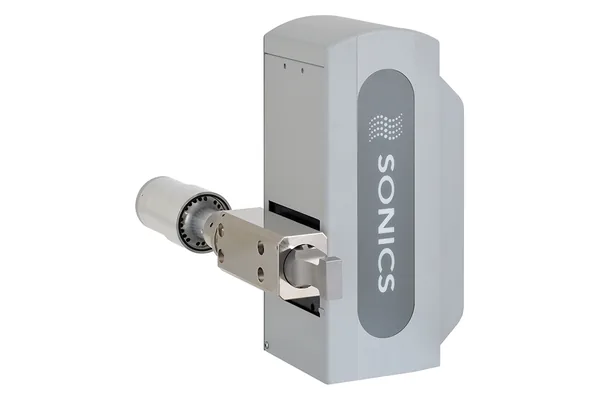
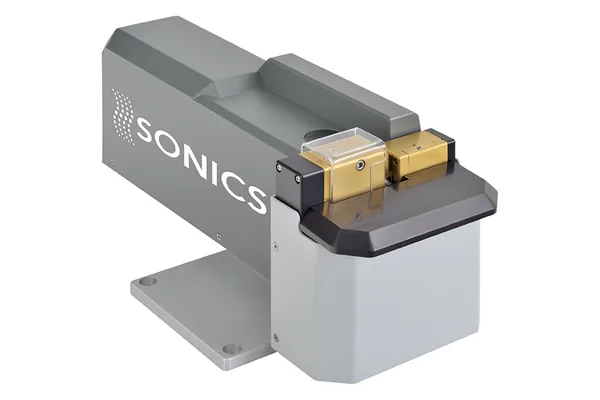
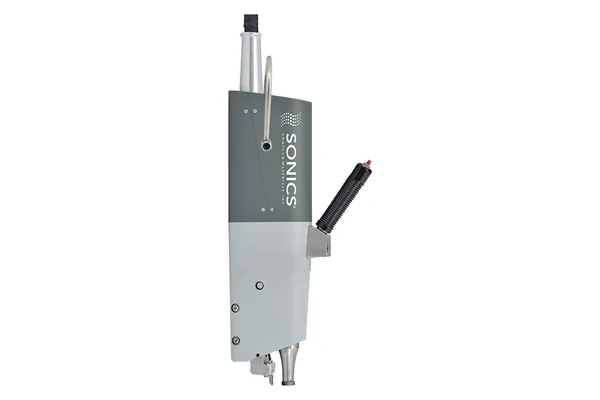
Ultrasonic metal welding joins two or more metal parts using high-frequency vibration and pressure — no heat input from an external source, no filler material. Vertex represents three system types in this category: ultrasonic spot welders, ultrasonic wire splicers and ultrasonic battery pack welders. Common applications include battery tabs, busbars, wire harnesses and EV powertrain components.
Vertex brings 28 years of engineering experience to every specification in this category. The technology has surged in importance alongside electric vehicle and battery energy storage growth, where reliable, repeatable metal joints decide whether a pack passes final inspection. Engineers in Indiana, Kentucky and select areas beyond use Vertex to specify the right system for the application.
What Vertex supports on every project
Ultrasonic spot welders for thin-gauge metal joining
Ultrasonic wire splicers for stranded copper wire assemblies
Ultrasonic battery pack welders for cell-to-tab and tab-to-busbar joints
Application engineering review of metals, gauges and joint geometry
Process development for new battery pack and EV powertrain assemblies
Sample welding to prove the process before capital commitment
Each ultrasonic system fits a specific joint type and a specific power class. The application drives the recommendation.
Ultrasonic spot welders
Create individual joints between thin-gauge metal sheets, foils or tabs. The horn vibrates against the upper material under pressure, producing a solid-state joint without melting. Common on battery tabs, sensor housings and electrical contacts.
Ultrasonic wire splicers
Join stranded copper wires into compact, gas-tight splices. The system bundles, compresses and vibrates the wires under pressure to fuse them into a single conductor. Common in automotive wire harness manufacturing where solder and crimps fall short.
Ultrasonic battery pack welders
Higher-power systems designed for cell-to-tab, tab-to-busbar and module-level connections in lithium-ion, lithium iron phosphate and similar chemistries. Critical for EV powertrain and BESS production, where current capacity, joint resistance and cycle life depend on the weld.
Ultrasonic metal welding versus plastic ultrasonic welding
Metal versus plastic
Both use high-frequency vibration, but the materials and the physics differ. Plastic ultrasonic welding melts the joint surface — the vibration creates heat at the interface. Ultrasonic metal welding does not melt the metal: it produces a solid-state weld through localised friction and material flow under pressure. Different equipment, different applications, different process windows.
How Vertex approaches the specification process
A wrong system in this category produces high-resistance joints that fail in service. Vertex prevents that by running every project through five steps.
Application assessment
Vertex reviews the metals, gauges, joint configuration and electrical or mechanical performance requirements with the engineering team.
Process recommendation
Jeff identifies whether the application fits spot welding, wire splicing or battery pack welding — and what power class and tooling the part requires.
Sample welding
Where possible, Vertex coordinates sample welding on your actual parts to validate the process before any capital is committed.
Equipment specification
Vertex specifies the system from an authorised capital equipment manufacturer, including horn, anvil and fixture design for the joint.
Implementation support
Vertex supports the client through installation, process tuning and quality verification so the system holds spec at production rate.
Can ultrasonic welding join dissimilar metals?
Dissimilar metals
Yes — ultrasonic metal welding is one of the few processes that can reliably join dissimilar metals, including copper to aluminum, copper to nickel and aluminum to steel. The solid-state weld avoids the intermetallic compound problems that plague fusion welding of dissimilar metals. Critical for battery pack manufacturing, where copper terminals meet aluminum busbars.
Where this technology shows up
Applications have expanded sharply alongside electric vehicle and battery energy storage manufacturing. Battery pack production — across lithium-ion, lithium iron phosphate, lead acid, AGM and supercapacitor chemistries — relies on the technology for tab-to-cell and tab-to-busbar connections. EV powertrain assembly uses it on busbars and high-current connections. Automotive wire harnesses rely on ultrasonic splicing. Stack-welded BESS modules depend on it as well. See the full picture on industries served.
Frequently asked questions
Ultrasonic metal welding works best on non-ferrous metals — copper, aluminum, nickel, brass, gold and silver. It also joins thin-gauge steel and dissimilar metal combinations like copper-to-aluminum that fusion welding struggles with. Vertex reviews material pairing as part of the application assessment before recommending a system.
Ultrasonic wire splicing joins stranded copper wires into compact, gas-tight splices without solder or crimps. Common in automotive wire harness manufacturing where every gram and every failure mode matters. The splice carries current as reliably as solid wire and survives the vibration and thermal cycling of a vehicle environment.
An ultrasonic battery pack welder vibrates a tooling horn against the upper component — typically a battery tab — under pressure against the lower component. The vibration generates localised friction that disrupts surface oxides and produces a solid-state metallurgical bond. No melting, no filler. The joint is low-resistance, high-strength and gas-tight.
An ultrasonic spot welder creates a single point weld between two thin-gauge metal components using high-frequency vibration and pressure. It differs from electrical resistance spot welding, which uses current to melt the metals. Ultrasonic is solid-state, cleaner and well suited to conductive metals like copper and aluminum that resist resistance welding.
Yes. Battery energy storage systems — including battery modules, flow batteries and stack-welded assemblies — sit inside the energy storage applications Vertex supports. Ultrasonic metal welding is central to the joint strategy for these assemblies. Vertex specifies the systems and supports clients through process development and implementation.
Specify your ultrasonic metal welding system with Vertex
Battery packs, busbars, wire splices and EV powertrain assemblies — Vertex specifies the system that fits the part.