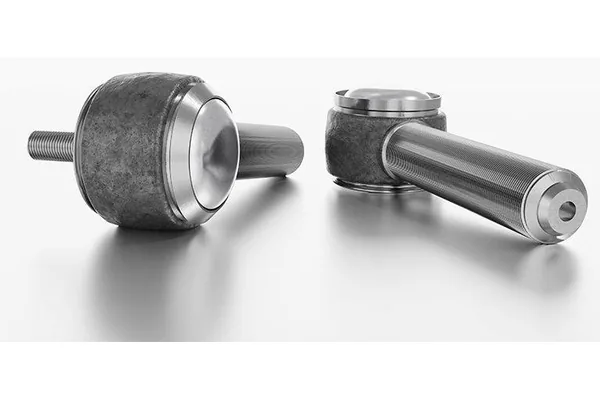
Radial, orbital, servo, roller and articulated roller forming. Five processes, each with a different force profile — and only one of them is right for your joint.
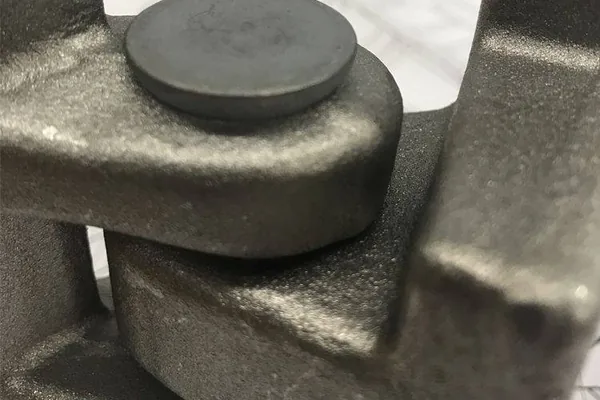
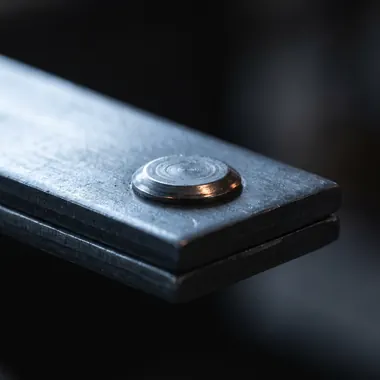
Metal riveting is the process of joining two or more components by deforming a metal rivet or stud to create a permanent mechanical assembly. Vertex represents five core technologies in this category — radial riveting, orbital riveting, servo riveting, roller forming and articulated roller forming. Each method fits a different part geometry, material and production rate.
Vertex brings 28 years of engineering experience to every metal riveting and forming specification. Jeff Trotta uses an application engineering approach to identify the right process before any capital equipment is committed. Engineers in Indiana, Kentucky and select areas beyond use Vertex to specify equipment that performs on the production floor — not on a brochure.
What Vertex supports on every project
Radial riveting machines for clean, controlled deformation
Orbital riveting machines for higher-force applications
Servo riveting technology for programmable force and depth control
Roller forming systems for continuous edge and seam work
Articulated roller forming for complex geometries and tight access
Application engineering review of part, material and joint design
Each process produces a different joint and fits a different application. Picking correctly the first time avoids tooling rework and stranded capital.
Radial riveting
A tool head follows a controlled radial path around the rivet, gradually deforming the material with low peak force. Produces a clean, repeatable joint with minimal stress on surrounding components. Common on electronic assemblies, lock mechanisms and parts with delicate adjacent features.
Orbital riveting
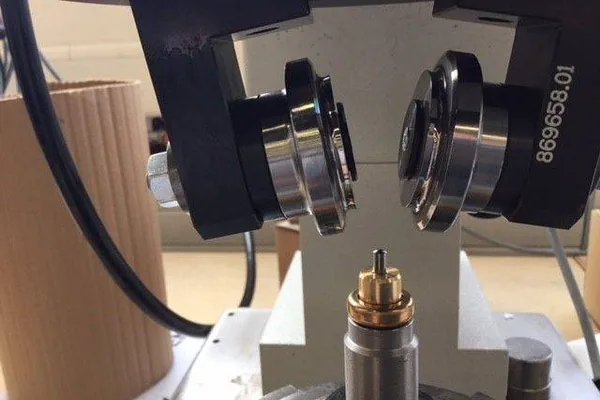
A tool head orbits the rivet center, applying continuous force through a kinematic path. Handles larger rivets and higher-force applications than radial riveting while still spreading load across the cycle. Common on automotive structural and heavy assembly work.
Servo riveting
Programmable force, depth and rate control across the riveting cycle. The servo system records each cycle for traceability and can adjust on the fly to material variation. Used where joint integrity has to be proved on every part, not just sampled.
Roller forming
A continuous roller path deforms metal along an edge or seam. Used on lid closures, container seams and assemblies where the joint runs along a length rather than a single point.
Articulated roller forming
Roller forming with an articulated head that follows complex part geometries, reaching into recessed or angled features that a fixed roller cannot access. Used on assemblies where access constraints rule out conventional forming.
Which metal riveting process should I use?
The short answer
The right metal riveting process depends on rivet size, joint force requirements, surrounding part sensitivity and production rate. Radial riveting fits delicate assemblies. Orbital riveting handles higher forces. Servo riveting adds programmable control and per-cycle traceability. Roller forming and articulated roller forming handle continuous seams and complex geometries. Vertex assesses the application before recommending the technology.
How Vertex approaches a metal riveting project
A riveting application that produces inconsistent joints traces back to a specification decision — wrong process, wrong force profile, wrong tooling. Vertex prevents that by running every project through five steps.
Application review
Vertex reviews the part, the material, the rivet specification and the joint requirements with the engineering team.
Process selection
Jeff identifies which of the five technologies fits the application, based on force needs, geometry, surrounding component sensitivity and production rate.
Feasibility work
When the application is novel or the tolerances are tight, Vertex coordinates feasibility work to prove the recommended process on the actual part.
Equipment specification
Vertex specifies the machine from an authorised capital equipment manufacturer, including tooling requirements and force profile.
Implementation support
Vertex supports the client through installation, setup and post-launch tuning so the system holds spec at production rate.
Radial versus orbital riveting
Radial versus orbital
Radial and orbital riveting both deform a rivet with a tool head moving through a controlled path, but the path and the force profile differ. Radial riveting follows a star-shaped radial pattern with low peak force — ideal for delicate parts. Orbital riveting orbits the rivet center with continuous higher-force engagement — better for larger rivets and structural joints.
Why Vertex for metal riveting and forming equipment
Most equipment vendors push the machine they sell most often. Vertex picks based on the part. Across roughly 300 completed projects, the recommendation has always come from the application — what the joint needs, what the surrounding components tolerate, and what the production rate requires. Clients in Indiana, Kentucky and select areas beyond get direct access to the founder on every project, not a handoff to a junior account manager.
Frequently asked questions
Servo riveting uses a servo-driven force and motion system in place of pneumatic or hydraulic actuation. The system records force, depth and rate on every cycle, allowing the recipe to adjust in real time to material variation. Used where every joint has to be proved rather than sampled, and where traceability data is required for the assembly.
Articulated roller forming uses a roller head mounted on an articulated arm that can follow complex part geometries. The articulation reaches recessed features, angled surfaces and access-constrained joints that a fixed-axis roller cannot reach. Common on assemblies where part shape would otherwise rule out roller forming entirely.
The five technologies handle most common rivet and stud materials — steel, stainless steel, aluminum, brass and copper. Material selection drives the force profile and the tooling. Vertex reviews material compatibility as part of the application engineering process before recommending equipment.
Yes. The riveting and forming equipment Vertex represents can be integrated into automated assembly cells with part handling, fixturing and inspection. The level of automation reflects production volume, part variation and quality verification requirements. Vertex scopes the automation case alongside the riveting process itself.
Yes. Vertex supports clients through installation, setup, operator training and post-launch tuning. The application engineering relationship continues past the purchase order so the system holds spec at production rate.
Specify your metal riveting equipment with Vertex
Direct access to the founder, process selection grounded in the part, and coverage across Indiana and Kentucky.