Spin welding
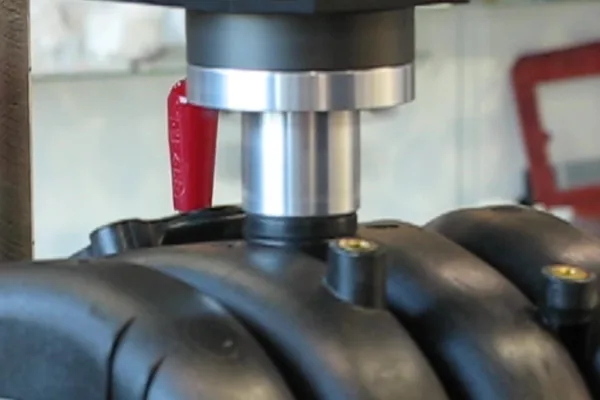
Joins circular plastic parts. One part rotates against the other under pressure until friction generates the heat needed to fuse the joint. Common on fluid bottles, filters and other round assemblies.
Five processes, one question: which one does your part actually need? Vertex specifies spin, hot plate, laser, ultrasonic and heat staking equipment from the part outwards.
What is plastic welding?
Plastic welding is the process of joining two or more plastic parts using heat, friction or vibration instead of adhesives, fasteners or solvents. The five most common plastic welding technologies are spin welding, hot plate welding, laser plastic welding, ultrasonic welding and heat staking. Each one fits a different part geometry, material and production volume.
Vertex Manufacturing Solutions represents capital equipment manufacturers across all five plastic welding technologies. Jeff Trotta brings 28 years of engineering experience to every specification, with an application engineering approach that starts with the part — not the equipment. Engineers in Indiana, Kentucky and select areas outside that footprint use Vertex to identify the right welding process before committing capital.
Start a plastic welding conversation
Each plastic welding technology has a sweet spot. Picking the wrong one wastes capital and stalls production.
Joins circular plastic parts. One part rotates against the other under pressure until friction generates the heat needed to fuse the joint. Common on fluid bottles, filters and other round assemblies.
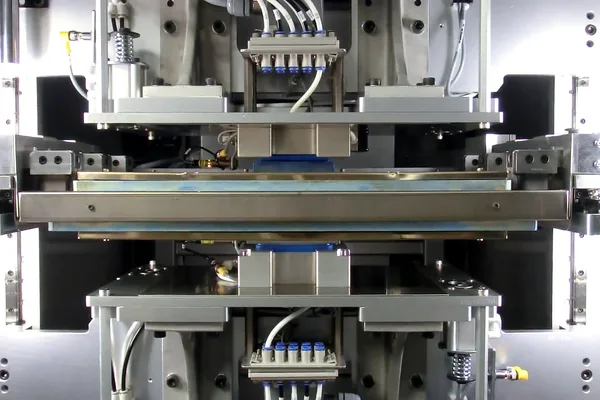
A heated platen melts the joint surfaces of two plastic parts, which are then pressed together and held until the joint solidifies. Strong, hermetic seals on larger parts. Common on automotive fluid reservoirs and underhood components.
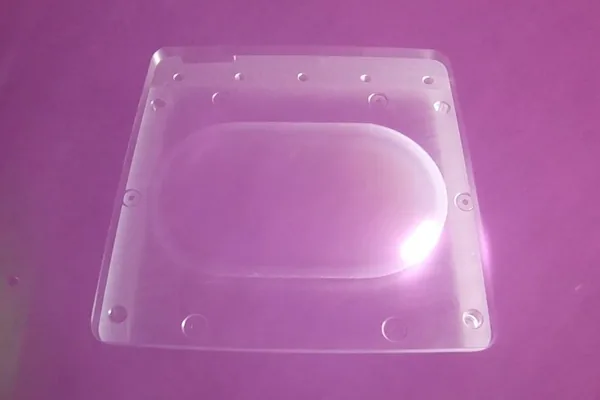
A laser passes through one transparent plastic part and is absorbed by a second pigmented part, generating heat at the interface. Precise, low-particulate and well suited to medical devices, microfluidics and electronic housings.
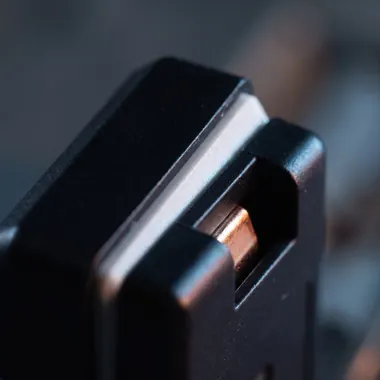
High-frequency vibration generates heat at the joint between two plastic parts. Fast cycle times, well suited to small and mid-sized parts at high production volume. Common across electronics, automotive interiors and consumer goods.
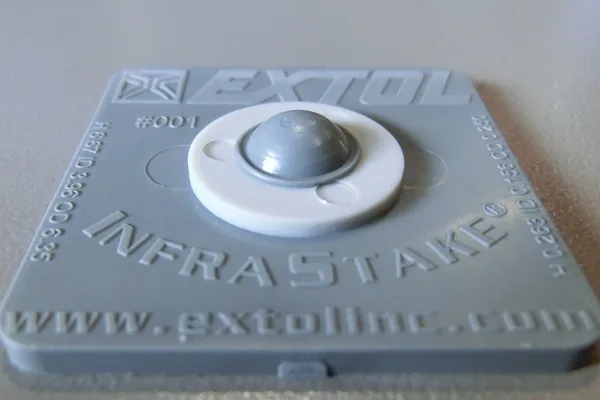
A heated tool deforms a plastic boss or stake to capture a second component — often a metal part, a PCB or a fabric layer. Used where a permanent mechanical capture is needed rather than a fused joint.
The short answer
The right plastic welding technology depends on part geometry, material, joint design and production volume. Spin welding fits circular parts. Hot plate welding handles larger parts and hermetic seals. Laser plastic welding suits precise medical and electronic work. Ultrasonic welding excels at small parts at speed. Heat staking captures components rather than fusing joints. Vertex assesses the application before recommending the technology.
A plastic welding application that fails on the floor almost always traces back to a decision made before the equipment was specified. Vertex runs every project through five steps to prevent that.
Vertex reviews the part, the material, the joint geometry and the production targets with the engineering team. Engineer to engineer.
Jeff advises on design attributes that affect weld success — joint design, energy directors, weld surface area and material selection.
When viability is uncertain, Vertex coordinates lab work to prove the welding process works on the actual part before any capital is committed.
Vertex provides analysis of joint strength across competing welding technologies so the recommendation is grounded in data, not opinion.
Vertex specifies the equipment from an authorised capital equipment manufacturer and supports the client through implementation.
Welding versus staking
Plastic welding fuses two plastic parts together by melting and re-solidifying the joint, creating a single bonded assembly. Plastic staking deforms a plastic boss to mechanically capture a second component — often a metal part or a PCB. Welding creates a joint between plastics. Staking captures a non-plastic component inside a plastic part. They solve different assembly problems.
Two recent Vertex projects show the application engineering approach in practice.
Injection molding · threaded inserts
A plastic injection molding customer had operators installing metal threaded inserts into plastic parts using heated tools. The process was slow, and the heated tools created safety concerns on the production floor.
Vertex brought a Sonics & Materials handheld ultrasonic staking demo unit to the customer’s production floor so operators could try it in their own application.
Several ultrasonic units are now deployed across the operation, and the heated tools are gone.
Tier 1 automotive · truck grilles
A Tier 1 automotive supplier wanted to eliminate the gluing process used to assemble large plastic truck grilles.
Vertex worked with Extol engineers to determine the feasibility of infrared heat staking as a replacement, and advised grille design changes to make the new process viable. Extol developed a custom 42-point IR heat staking machine for the assembly.
The gluing process was retired and the IR staking system went into production.
Most thermoplastics can be welded — including ABS, polycarbonate, polypropylene, polyethylene, nylon, acrylic and PEEK. Material compatibility between the two parts being joined matters as much as the material itself. Vertex assesses material pairing as part of the application review before recommending a welding process.
Laser plastic welding equipment carries a higher initial capital cost than ultrasonic or heat staking systems. Total cost of ownership often favors laser welding for applications requiring precision, low particulate generation or visual aesthetics on the finished part. Vertex evaluates the cost-to-benefit balance against alternative processes during the feasibility review.
Yes. Vertex has deployed Sonics & Materials handheld ultrasonic staking tools at multiple injection molding customers to install metal threaded inserts into plastic parts. The ultrasonic process replaced heated tools that were slower and posed safety risks for operators on the production floor.
The honest answer is feasibility lab work. Material, joint design and production targets all affect outcomes. Vertex coordinates lab work to prove welding viability on the actual part before any capital equipment is specified. The lab result decides the recommendation.
Yes. Vertex coordinates lab work to prove plastic welding viability on a specific application and to analyze joint strength across competing welding technologies. The lab work happens before capital is committed, so the equipment recommendation reflects what actually performs on the part.
Every inquiry goes to Jeff Trotta directly — 28 years in product design, application engineering and engineering management. No account handoffs.