Assembly automation is the use of machines and integrated systems to perform tasks that operators traditionally do by hand — fastener feeding and driving, part placement, joining and verification. Vertex represents equipment manufacturers in three core areas: fastener feeding and driving, plastic assembly automation built around welding, and leak detection of hermetically sealed assemblies.
Vertex brings 28 years of engineering experience to every specification, with an application engineering approach grounded in roughly 300 completed projects. Engineers in Indiana, Kentucky and select areas outside that footprint use Vertex to scope, demonstrate and deploy automation that actually performs on the production floor.
What Vertex supports on every project
Fastener feeding and driving systems including screws, hex nuts and clips
Plastic assembly automation integrated around welding and joining technologies
Leak detection of welded plastic assemblies requiring hermetic seals
Production line and process review before any capital is committed
ROI and cycle time analysis to justify the automation investment
Equipment demonstrations on the customer's actual parts
Vertex represents equipment manufacturers across three specific assembly automation categories. Each one solves a different production problem.
Fastener feeding and driving
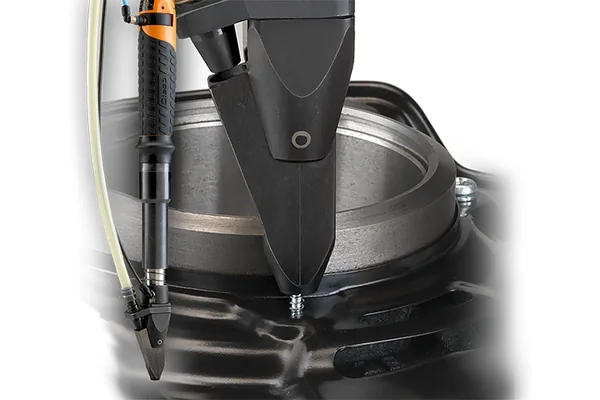
Automated systems that feed, present and drive screws, hex nuts and clips into assemblies, replacing the manual process of an operator picking, positioning and torquing each fastener by hand. Used where speed, torque consistency and operator ergonomics drive the production case.
Plastic assembly automation
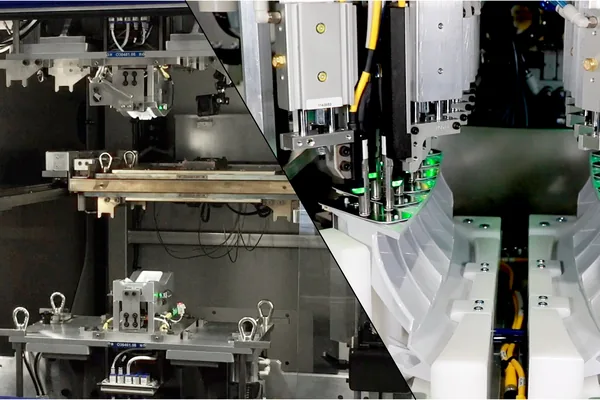
Integrated automation built around the plastic welding and joining technologies Vertex represents. Combines part handling, weld processing and verification into a single system so the weld process stays repeatable across high production volumes.
Leak detection
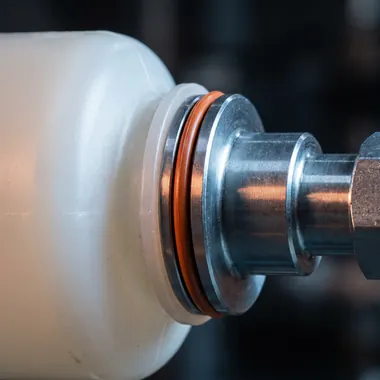
Verification of welded plastic assemblies that need to be hermetically sealed. The detection step proves the weld actually achieved the required seal before the assembly leaves the line. Used on fluid bottles, pressure vessels and other parts where a missed leak becomes a field failure.
How do I justify the cost of an assembly automation project?
Cost justification
Cost justification rests on three drivers — labour reduction, cycle time improvement and quality consistency. Manual fastening, welding and inspection processes carry labour costs, operator variability and rework that automation removes. Vertex provides ROI and cycle time analysis tied to your actual production volumes, so the capital request reflects measurable returns rather than vendor claims.
How Vertex approaches the specification process
A wrong specification on an automation system creates expensive scrap on day one and a stranded asset by year two. Vertex runs every project through five steps to prevent that.
Production line review
Vertex reviews the existing assembly process — operator steps, cycle times, throughput targets and quality requirements — with the manufacturing team.
ROI and cycle time analysis
Jeff builds the cost-to-benefit case using your actual labour, scrap and volume numbers. Capital requests survive when the maths is real.
Equipment demonstrations
Where possible, Vertex brings demo equipment to your production floor so operators can run it on the actual parts before any purchase commitment.
System specification
Vertex specifies the system from an authorised capital equipment manufacturer, including integration requirements with the existing line.
Implementation support
Vertex supports the client through installation, operator training and post-launch tuning so the system performs at the specified rate.
Does automation replace or enhance machine operators?
Operators and automation
Assembly automation typically enhances operators rather than replacing them. The systems remove the repetitive, ergonomically punishing or safety-critical steps from the operator’s job while keeping the operator in the loop for setup, exception handling and quality oversight. Operators tend to prefer working alongside automation that takes the worst tasks off their hands.
Project example
Defense · naval assets
Manual screw driving replaced across multiple stations
A defense industry customer wanted to streamline an operator manual screw driving assembly process used to build a device for naval assets. The existing process relied on hand-driving screws across multiple stations, which introduced cycle time variability and inconsistent torque on a critical application.
Vertex specified Visumatic VLB-900 Locking Bit screw feed and drive systems for the operation, with several systems going into different operator stations and applications across the line.
Faster assembly times, with precise screw torque management and control at every station.
Frequently asked questions
Yes. Hex nuts can be blow-fed and driven using the fastener feeding and driving systems Vertex represents. The system feeds the nut from a bulk supply to the driver via air pressure, then drives the nut to torque spec. Common on assemblies where hex nuts need to be installed consistently at production speed.
Yes. Clip feeding and insertion is a standard capability in the fastener feeding and driving equipment Vertex represents. Common on automotive interior assemblies, electronics enclosures and consumer products where plastic clips capture trim, panels or covers at production rate.
Leak detection verifies that a welded plastic assembly actually achieved its hermetic seal before leaving the line. The test pressurises or vacuum-tests the assembly and measures whether the seal holds within spec. Used on fluid bottles, reservoirs and any plastic assembly where a missed leak becomes a warranty or safety issue.
Plastic assembly automation integrates part handling, the weld process and post-weld verification into a single system. The welding technology — ultrasonic, hot plate, spin, laser or heat staking — sits at the center of the cell. Part loading, fixturing, weld cycle and leak detection run around it.
Vertex supports automation projects across automotive, consumer products, energy storage, industrial, life sciences and defense applications. The defense screw driving deployment, plastic welding automation in automotive, and leak detection on fluid bottle production are representative examples from the project history.
Specify your assembly automation system with Vertex
Direct access to the founder, demo equipment running on your own parts, and coverage across Indiana and Kentucky.